29+Years
29+Years
29+Years


5 Available
Condition: New

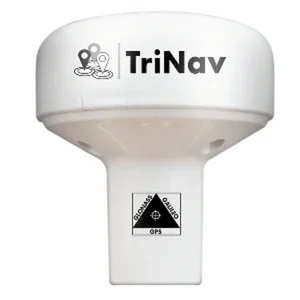
GPS160 TriNav Sensor with NMEA 0183 Output
The GPS160, a high performance positioning sensor using GPS, Galileo and Glonass satellite systems for exceptional positioning accuracies and redundancies.
TriNav technology allows all three systems to be simultaneously utilized for navigation. The device can also be field programmed for a variety of modes such as single GNSS operation (eg Galileo only) as well as output configurations such as update rate, NMEA sentence structure etc
The GPS160 is available with a NMEA 0183 output (4800, 38400 and 115200 baud programmable) and a USB variant for PC, MAC and Linux. For NMEA 2000 systems, a bundle is available with iKonvert allowing easy and flexible NMEA 2000 installation without the need for cumbersome drop cables.
The GPS160 also support an external MOB switch or device. When activated, it creates a “synthesized” AIS SART MOB message on the NMEA output which can be interfaced with a local plotter for MOB identification.
The GPS160 supports GPS, Glonass and Galileo positioning. Our TriNav technology is used to combine signals from all three systems to compute the best possible fix accuracy and reliability.
Galileo is the global navigation satellite system (GNSS) that has been developed over the past two decades. It joins the GPS and GLONASS systems and offers mariners a 3rd reliable positioning source. It is planned to be fully operational in 2020.
Features:
The Digital Yacht GPS160 TriNav Sensor with NMEA 0183 Output is a high-performance positioning sensor designed for IT and marine professionals requiring precise and reliable navigation data. This device utilizes GPS, Galileo, and Glonass satellite systems simultaneously through TriNav technology to achieve sub-1 meter accuracy and enhanced redundancy. It is suitable for integration into existing NMEA 0183 systems, offering programmable baud rates (4800, 38400, 115200) and configurable NMEA sentence structures via internal DIP switches. The sensor can also be field-programmed for single GNSS operation, such as Galileo only, and supports update rates up to 18Hz. Additionally, it features an anti-spoofing algorithm for robust performance and can generate a synthesized AIS SART MOB message when connected to an external MOB switch. The ZDIGGPS160 addresses the need for accurate and flexible positioning data in various operational environments.
GPS160 TriNav Sensor with NMEA 0183 Output
The GPS160, a high performance positioning sensor using GPS, Galileo and Glonass satellite systems for exceptional positioning accuracies and redundancies.
TriNav technology allows all three systems to be simultaneously utilized for navigation. The device can also be field programmed for a variety of modes such as single GNSS operation (eg Galileo only) as well as output configurations such as update rate, NMEA sentence structure etc
The GPS160 is available with a NMEA 0183 output (4800, 38400 and 115200 baud programmable) and a USB variant for PC, MAC and Linux. For NMEA 2000 systems, a bundle is available with iKonvert allowing easy and flexible NMEA 2000 installation without the need for cumbersome drop cables.
The GPS160 also support an external MOB switch or device. When activated, it creates a “synthesized” AIS SART MOB message on the NMEA output which can be interfaced with a local plotter for MOB identif


The GPS160 TriNav Sensor uses GPS, Glonass, and Galileo satellite systems. Its TriNav technology combines signals from all three for optimal accuracy and reliability.
This specific GPS160 model features an NMEA 0183 output. It supports user-selectable baud rates of 4800, 38400, and 115200 via internal DIP switches.
Yes, the device can be field-programmed to operate in single GNSS modes, such as Galileo only, in addition to its default TriNav operation.
Thanks to its TriNav technology, which combines all satellite data, the GPS160 typically achieves sub-1 meter accuracy.
ZDIGGPS160 - Digital Yacht GPS160 TriNav Sensor w/NMEA 0183 Output